The Unfinished Masterpiece

Witness the grandeur of Raja Bhoj's vision in the 11th Century.

Plan Your Visit

The Somnath of the East

The Bhojeshwar Mahadev Temple is an architectural enigma. Standing on a hill overlooking the Betwa River, this temple is famous for possessing one of the largest Shiva Lingams in the world and being a magnificent structure that was never completed.

The Colossal Lingam

The heart of the temple houses a Shiva Lingam of staggering proportions. Due to its immense height, priests must use a huge limestone staircase to perform rituals.

Height 7.5 ft (Lingam)
18+ ft (Total with Platform)
Material Carved from a Single Rock (Monolithic)
Era 11th Century (1010–1055 AD)

11th Century Engineering

Techniques centuries ahead of their time
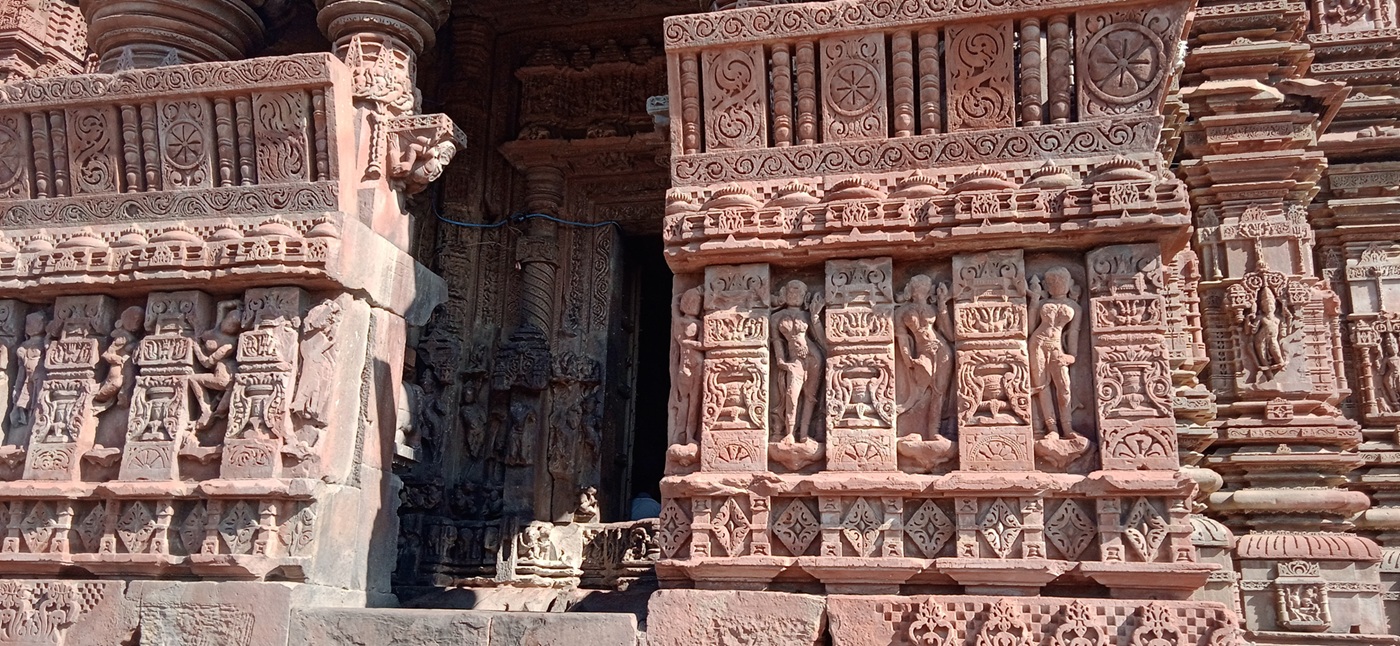
Bhojpur Rock Drawings

Blueprint on the Rocks

Bhojpur is unique because you can still see the original architectural plans engraved on the surrounding rocks. These detailed line drawings prove that ancient Indian engineers used "CAD-like" planning before laying a single stone.
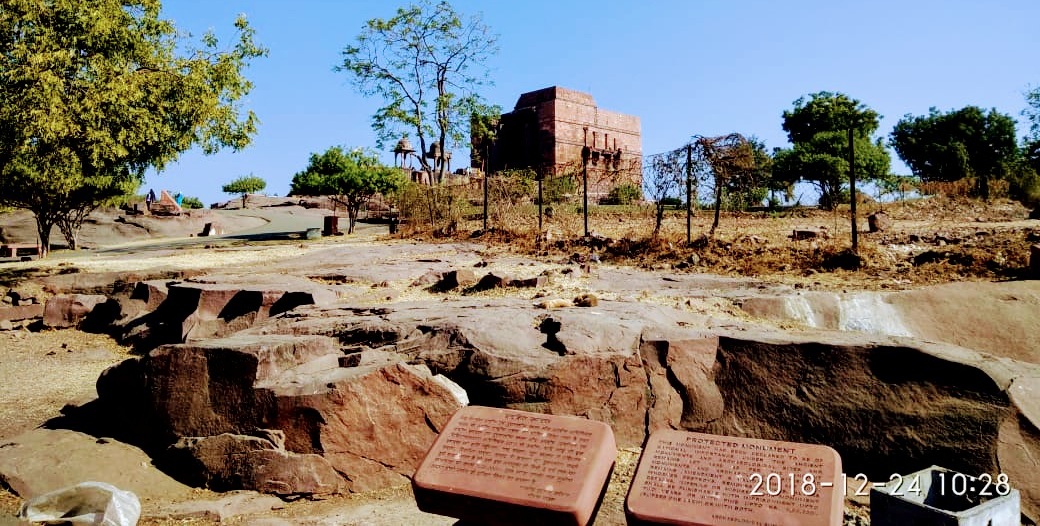
Bhojpur Earth Ramp

The Earth Ramp

How do you lift a 70-ton stone without a crane? Behind the temple lies a massive earthen mound—the original construction ramp. Elephants and logs were used to roll massive stones up this incline.
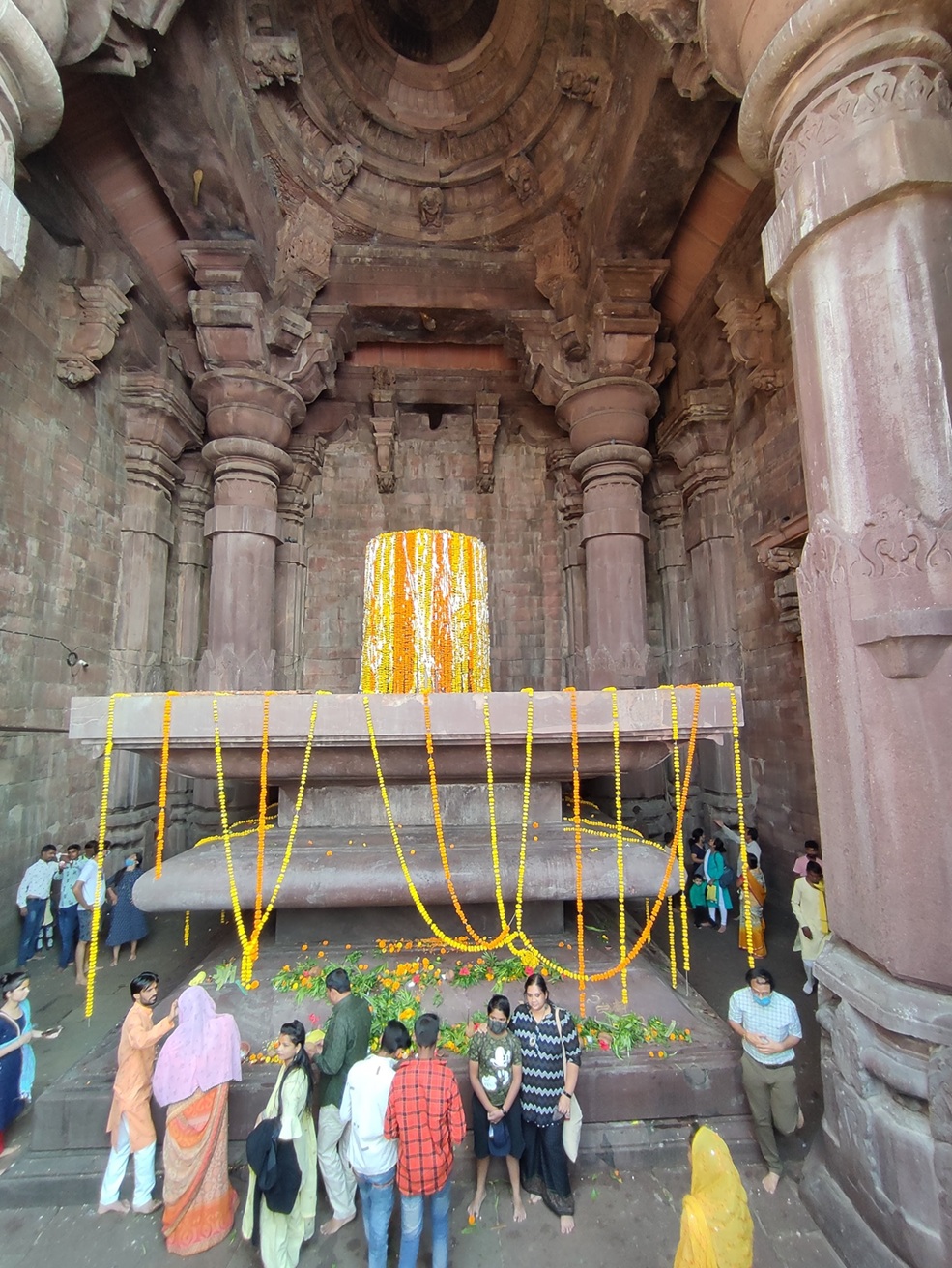
Bhojpur Huge Doorway

The 33-Foot Doorway

The entrance to the sanctum is a staggering 10 meters (33 feet) high. It is one of the largest temple portals in India, designed to match the scale of the colossal Lingam inside.
Hidden Gems & Mysteries

Mason Marks Stone

The Mason Marks

Look closely at the stones, and you will see over 1,300 signatures. These are the marks of the individual masons and guilds who built the temple. It is a rare tribute to the workers, with names of over 50 masons engraved for eternity.

Rock Shelter Caves

Parvati's Cave

Just opposite the temple lies a rock shelter known as "Parvati's Cave." It contains ancient sculptures and architectural fragments, offering a quiet spot for meditation away from the main crowd.

Betwa River Bhojtal

The Lost "Sea" (Bhojtal)

In the 11th century, the temple overlooked a massive man-made reservoir called Bhojtal. In the 15th century, Sultan Hoshang Shah destroyed the dams. Legend says it took his army 3 months to break the dam and 3 years for the "sea" to drain completely.

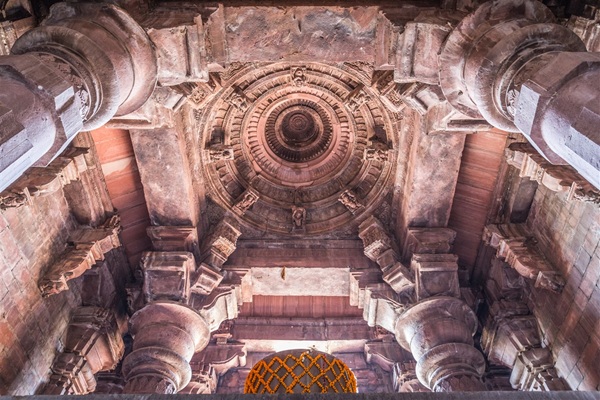
Unique Temple Ceiling

Unique Ceiling

Look up! The temple has a unique rectilinear roof (flat pyramid style) instead of a curved Shikhara. The ceiling features intricate concentric circles and carvings of bharavahakas (weight bearers) that are often missed by visitors.

Unique Temple Ceiling

Unique Ceiling

Look up! The temple has a unique rectilinear roof (flat pyramid style) instead of a curved Shikhara. The ceiling features intricate concentric circles and carvings of bharavahakas (weight bearers) that are often missed by visitors.

Unique Temple Ceiling

Unique Ceiling

Look up! The temple has a unique rectilinear roof (flat pyramid style) instead of a curved Shikhara. The ceiling features intricate concentric circles and carvings of bharavahakas (weight bearers) that are often missed by visitors.

Visitor Guide

🕒 Timings

6:00 AM - 7:00 PM (Daily)

🎟️ Entry Fee

Free Entry
(Nominal parking charge)

📅 Best Time

October to March
Maha Shivaratri (Annual Fair)

🚗 Trip Planning: From Indore

Route: Indore ➜ Bhopal ➜ Bhojpur (Approx 220 km / 4-5 hours)


Recommended Itinerary: